What I did in 2023 #
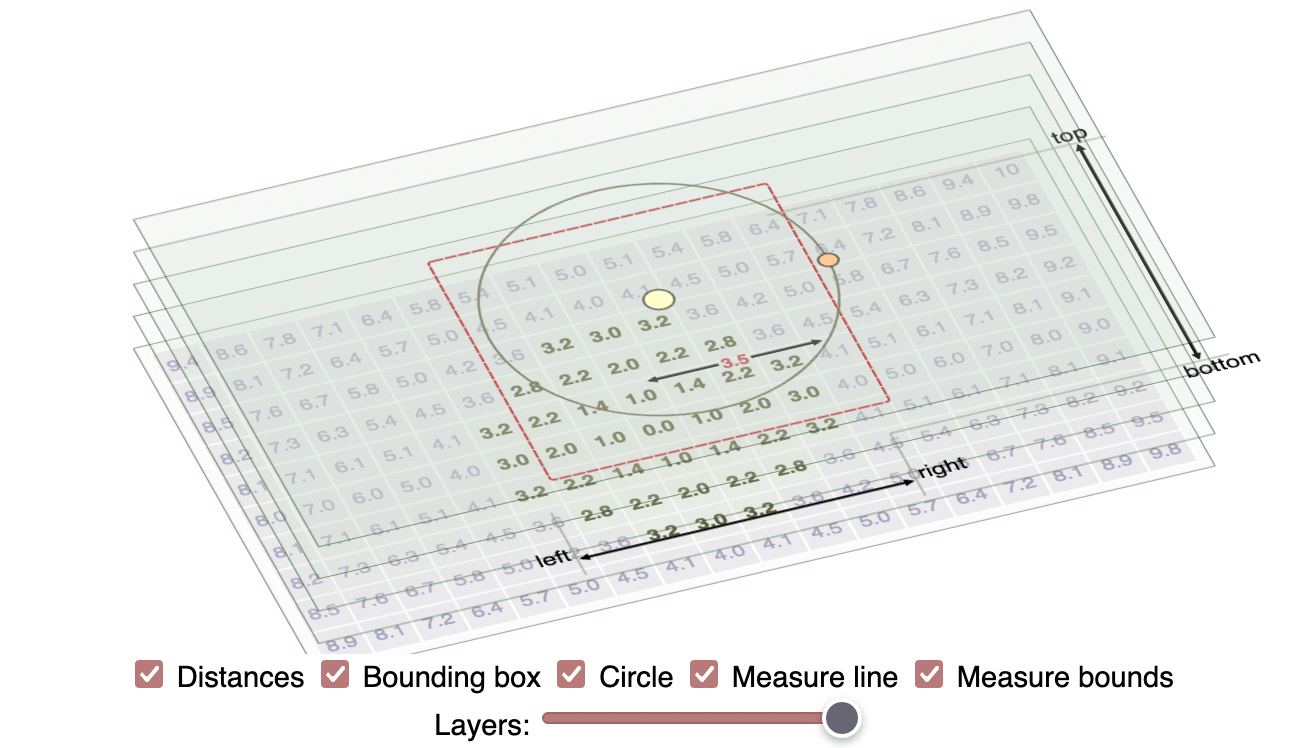
It's time for my annual self review. In last year's review I said I didn't have clear goals for 2023, and I would probably just do whatever was interesting. I did a bunch of interesting things. Unlike last year, I didn't spend much time on art or science. The first part of the year I was learning about drag & drop on the web. Then I worked on map generation. and the last part of the year were productive, but I felt kind of aimless in the middle.
Labels: annual-review
What I did in 2022 #
It's time for my annual self review. It's been another weird year. Last year I said I was going to spend more time on experiments, art, and learning, and I would improve my existing guides.
Labels: annual-review
What I did in 2021 #
It's time for my annual self review. It's been a messed up year, not only for me but for many other people. Last year I said I wanted to learn some biology and math. I didn't have any particular goals for game or tutorial projects. I knew the year would be a mess so I left it open ended.
Labels: annual-review
What I did in 2020 #
It's time for my annual self review. This has been a weird year. It was already turning out to be a weird year for me before the pandemic hit. In last year's annual review I wrote:
What are my goals for 2020? Unfortunately, I don't have any strong goals. After working on big projects in 2018, I ended up working on small projects in 2019. I would like to work on something bigger, but I think my focus will be on learning new things rather than explaining things I already know. I'd like to work on projects that last a month or two rather than a week or two, to really dig into them and learn a topic deeper than I can do in a week. Other than that, I feel kind of aimless right now. I'm ok with that. I'm in a wander-and-explore phase of my life.
Note the I feel kind of aimless right now. I had decided not to focus on tutorials in 2020. I was going to spend more learning things, traveling, and visiting friends. Then the pandemic arrived. So I dove into learning things, but put the rest on hold.
Labels: annual-review
What I did in 2019 #
It's time for my annual self review. You can see previous ones from 2015, 2016, 2017, 2018. I didn't have a lot of goals for this year:
- Write to my blog instead of only to Twitter or other closed platforms.
- Improve my explanations and write new ones.
Labels: annual-review
What I did in 2018 #
My plan, from a year ago, was:
- Produce explanations and demos from my procedural map generator experiments.
- Go back to old articles and update them.
- Work other developers on algorithms and articles.
- Write a tutorial on coordinate systems and cameras.
- Write tutorials about making interactive tutorials.
- Become faster at writing explanations.
What did I do in 2018? I think I did reasonably well with goals 1, 2, and 6, and not so well on goals 3, 4, and 5.
Labels: annual-review
What I did in 2017 #
What did I do in 2017? My plan, from my post a year ago, was:
- Help other people make interactive tutorials.
- Work on projects that lead to tutorials, instead of starting with the tutorials.
For the first goal:
- I met several people working on interactive tutorials / explorable explanations, and chatted with many more online. It was great to talk to other people making these kinds of tutorials!
- I was a mentor for Google Summer of Code, working with a student on interactive diagrams for Russell & Norvig's AI textbook, AI: A Modern Approach. He made the diagrams for chapter 3, chapter 4, and chapter 6. After the summer was over, I helped other students make diagrams for chapter 2, chapter 5, chapter 21, and chapter 22.
- I worked with a game developer on a tutorial (we didn't finish but I learned a lot)
- I made an interactive tutorial about making interactive tutorials, including a section on how to make “scrubbable” numbers like the ones in Bret Victor's Tangle library.
I'm pretty happy with how that went.
For the second goal:
- I worked on some small projects for Nonagon Games (including minimap-painter, some redis experiments, a serialization library, another map painter, a map renderer, resource placement)
- I worked on many procedural map generation experiments (for Nonagon Games, but also for a future tutorial)
- From these projects I wrote a dual mesh data structure library, added a setction about ridges to one of my tutorial pages, and made an HTML5 version of my polygon map generator.
Although I did work on many small projects, I didn't work on any big projects. I have mixed feelings about this.
Other things:
- I moved my site to a cheaper, faster web server
- I converted my site to https, which was quite a bit more complicated than I thought it would be
- I converted over 500 of my web pages from fixed width layouts to “responsive design”, and wrote an article about how it works ; it was a bit harder for my two column layouts
- I made incremental improvements to most of my web pages (wording, diagrams, interaction, etc.)
- I spent way too much time studying the color yellow
- I made a tool to turn an image into a polygon mesh, originally intended for map generation (you'd paint a map in MS Paint and then turn it into polygons) but more fun as an art tool
- I occasionally answered questions on stack overflow or reddit with interactive demos like this and this and this
- I made a creepy procedural animation of a bacterial cell
- I tracked these things on my trello page
What do I want to do in 2018?
- I learned a lot from my map experiments this year, and I'd like to produce some useful tutorials and demos from them. Several techniques could be added to the existing map generator.
- From working with others I was reminded how valuable iteration is. I want to go back to my older tutorials and update them.
- I want to continue working with game developers on algorithms that could turn into future tutorials.
- I want to write a tutorial on coordinate systems and cameras. I've tried this before but maybe the third time's the charm?
- I'd like to write a few more tutorials about writing interactive tutorials.
- I want to become faster at writing tutorials. Part of this is managing scope but part of it is using better libraries that let me reinvent less each time.
Labels: annual-review
Five Year Mission #
"Space, the final frontier. These are the voyages of the starship Enterprise. Its five-year mission: to explore strange new worlds, to seek out new life and new civilizations, to boldly go where no man has gone before." –Star Trek
Five years ago I started Red Blob Games to help game developers with interactive tutorials and also to make my own games. I had already been interested in interactive tutorials since 2004 and likely even earlier than that, but it wasn't something I had spent much time on. In August 2011 I made a explanation of "blind spots" when driving a car and discovered that by playing with the diagram, I learned things I hadn't ever learned when I had merely read about the topic. I decided to make many more interactive explanations of math and computer science topics, especially for game development. It was something I wanted to see more of in the world.
Around the same time, I discovered the work of Bret Victor. He wasn't writing interactive tutorials for game development, but he was thinking much bigger. Much, much, much bigger. His articles on “explorable explanations” and “ladder of abstraction” made me realize that there's a lot more to this than I realized.
The first interactive tutorial I published under Red Blob Games was at the beginning of 2012, about damage roll calculations and probability. Also early in 2012 I became pessimistic about making my own games so I decided to focus on helping others with my tutorials.
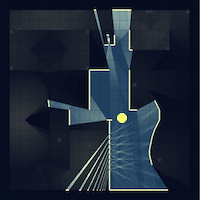
With the probability page, I followed a "textbook style" of starting with the basics and working my way up. I think that style didn't work so well. The top of the page was too bland; it didn't make people want to read more. For my second interactive tutorial, 2d visibility, I decided I needed more of a "journalist style" of starting with the juiciest thing at the top of the page and then the details later. I think this worked better.
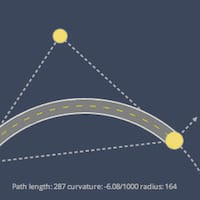
My third interactive tutorial was for curved roads and tracks. This project made me rethink my strategy. In 2012 I had been exploring "small" topics I didn't know much about while learning visualization, javascript, d3, svg, etc. This project took five months, and it was a topic not many people cared about. The combination of I'm learning something new (takes a lot of time, as I'm a slow learner) and it's not very useful stung badly and I had to do something different.
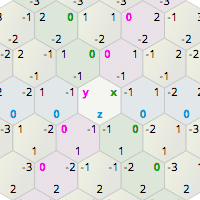
In 2013 I was more focused. I had some topics to explore, and I was better about prioritizing and "shipping". I wanted something that was both a topic I knew about and a topic that would be useful. I started with my guide to hexagonal grids. Not only did I want to have the best reference to hexagonal grid math on the web, I wanted to make better visualizations and a cleaner underlying implementation than I had for my previous articles. I'm quite happy with the way it turned out.
Also in 2013 I used Emscripten to port my old OS/2 game to run in the browser, I spent a month learning signal processing, and finished by writing a page about signal processing concepts and procedural map generation.
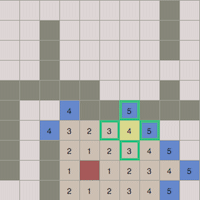
In 2014, I wanted to follow the success of 2013 with another topic I knew about and that people would find useful: pathfinding. I started with a tutorial for Tower Defense pathfinding (flow fields), then wrote a longer page about Breadth First Search, Dijkstra's Algorithm, and A*.
One thing that had gone wrong in earlier tutorials was that I explained the theory but not how to implement the algorithms. I had stayed away from implementations because I didn't want to pick a programming language, only to have a different langauge become popular a few years later. I want my pages to last for decades. But at the same time, it was definitely a weakness of my tutorials. I decided to write an implementation guide for the A* page, with both Python and C++ code, as well as a little bit of C#. To make sure that the code I presented on the web page actually ran correctly, I used Emacs Org Mode to write code that would get run during the html export process, and both the source code and its output would be shown on the page. This solved a problem I had with previous pages in which the code on the page would differ slightly from the code I had tested.
My style evolved from "journalist style" to "action movie style". In a James Bond movie, our hero might be falling out of an airplane, fighting the henchman for a parachute. Then the movie switches to Bond talking to his boss about the geopolitical situation in some country. The first scene is exciting but gives no explanation; the second scene is quiet and explains things. The movie alternates between visual-excitement scenes and story-informative scenes until we have a final battle in a secret volcano lair, as exciting as the opening scene, but the viewer now understands the plot and motivations. I now aim to start my tutorials with something cool looking, but without much explanation of how it works. Then I give explanations. Then I give something cool looking again. Then more explanations. Maybe something doesn't work out. Maybe we have to try something different. At the end, there's some demo that's cool, but better because the reader understands the algorithm.
Towards the end of 2014 I went to a workshop that Bret Victor organized to bring people together to talk about interactive documents. It was at this workshop we ended up with the Explorable Explanations page maintained by Nicky Case.
The workshop was absolutely amazing. It inspired me to write up notes on how I write tutorials (draggable markers, A* page). Unfortunately it also paralyzed me when I tried to write new tutorials. I started overthinking everything for a while. When I get stuck on complicated things I find it useful to go back to something simpler. I wrote a quick page about straight lines on a grid.
In 2015, I wanted to try something more ambitious, so I tried procedurally generating downloadable code libraries. I wanted my readers to pick a programming language, formatting style, and hexagonal grid characteristics (offset vs axial, y-up vs y-down, size, skew, etc.), and then my procedural generator would create a downloadable library that implements the hex grid algorithms for their needs. Neat, eh? I wrote a series of blog posts about this (1 - 2 - 3 - 4 - 5 - 6 - 7). I wrote an implementation guide and also generated code for C++, Python, Javascript, C#, Haxe, Java, Typescript, and Lua. I also procedurally generated unit tests for each of those languages and ran all of them as part of the publish process.
I also got a bit distracted working on pathfinding optimizations. I wrote a partial page about differential heuristics (which I think is a fantastic optimization with large speedups from little code) and a partial page about waypoint graphs instead of grids (which I'm less excited about now). 0fps wrote a nice optimized grid pathfinding library; I tried it and it ran A* in a mere 1-3 milliseconds on an 800x800 grid map. Pretty cool. But I didn't understand the algorithm and didn't write a tutorial about it.
I realized at some point that my most successful pages were about problems that I had in a real project, and the least successful pages were about problems that I expected to have in a future project. Curved roads and tracks weren't something I needed for a real project, as I've always used grids in building games. Regular A* was fast enough for all the projects I had worked on, so optimizing it further had never been something I needed to do for a real project. Every time I ventured into a topic where it didn't matter for my own projects, that tutorial failed.
This hit me hard. Over the past three years, half that time was wasted writing things that didn't really work out.
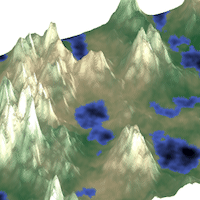
I decided that I needed to work on more real projects. I dug through existing projects to see if there was anything I hadn't written much about, and I found one: simple procedural map generation in 50 lines of code. The rest of 2015 I spent updating my skill set (C++, OpenGL, physics, networking, shaders, distance fields, etc.) instead of tutorials, so that I could work on real projects.
In 2016, I updated some of my existing pages (1 - 2), but lost motivation to work on new tutorials. I tried several times to work on a tutorial about coordinate systems but failed each time. I continued learning things by working on small projects (React.js, SVG, Lua, WebAudio, Pixi.js, neural networks, hexagonal tiling of spheres, stylized map rendering) but I don't have much to show for it. I've worked with game developers on small projects but don't have anything I can share yet.
So that's the past five years.
- The first year I worked on small tutorials and learned how to use Javascript, text, and diagrams to build the kinds of explanations I wanted to build.
- The second year I made the guide to hexagonal grids and a few other things.
- The third year I made the A* pathfinding tutorial, started adding implementation guides to my pages, and came up with a style I liked for my tutorials.
- The fourth year I wrote some fun projects but nothing had the impact of my earlier work, and I started to figure out why.
- The fifth year I learned a lot but lost motivation to write big tutorials.
I'm very happy with what I accomplished during this five year mission. The hexagonal grid guide and the pathfinding tutorial are the best things I've written. I loved exploring the capabilities of the medium. Web articles can be interactive explorations of topics and don't have to be static like magazine and newspapers articles. When I started, very few people wrote interactive essays, and now I see many people writing them. I think we'll see a lot more of them.
I love writing tutorials and I love working with game developers, but 2016 convinced me that I need to change my path. I don't know what's next for me. Will I extend my mission? Will I write my own game? Will I move on to something else? I don't have a plan for 2017.
Update: [2017 Mar] Going to the Game Developers Conference helped convince me that I should spend my time helping people make interactive tutorials. I'm working on two tutorials with other people, I've joined communities of people making interactive tutorials, and I'm also mentoring summer interns who are making interactive diagrams. Thanks for all the support!
Labels: annual-review
What I did in 2015 #
It’s been a while since I wrote a blog post. What did I do in 2015? The first part of the year started out good. I worked on hexes:
- I updated my Hexagonal Grid Reference with better explanations, better diagrams, and better sample code.
- I worked on a procedural code generator (1, 2, 3) that generates hexagonal grid libraries in C++, Python, Javascript, C#, Haxe, Java, Typescript, and Lua.
- I also procedurally generated the unit tests for those libraries, and ran the generated unit tests on the generated code.
- I also used the generated Javascript code for a new page, a guide to implementing hex grids. My tutorials are typically about the algorithms and not the code, but for this topic I made an exception.
After that, I lost my way. I became interested in pathfinding optimizations, and wrote some things that I didn’t finish:
- L1-Clarkson based A*, with a super fast implementation from 0fps. People often want to optimize the algorithm but a lot of the time, it’s better to focus on the data. Unweighted grids are a waste of A*’s capabilities; you can greatly speed up A* by not feeding it such inefficiently structured data. The algorithm demoed on this page implements one such possible transformation. Try the demo — it takes only milliseconds, in javascript, to find paths on a large grid map. For references and code, see this page.
- Differential heuristics demo and article. This is something 0fps recommended I explore. It turns out to be pretty awesome, with huge speed improvements with only a few lines of code. Unfortunately I lost interest partway through.
- Visibility graph construction to turn unweighted grids (tons of nodes for A*) into lightweight graphs. This can both speed up A* and make the paths on a grid look “straighter”. Unfortunately with this topic too I lost interest partway through.
The problem, I think, is that in my own games I’ve not needed these optimizations. So I was exploring a set of potential optimizations that I haven’t actually needed. In practice, a lot of optimizations are specific to a project, and without having worked on a real project that needed these, I didn’t have the confidence that they were good recommendations. Also, knowing that I haven’t actually needed these reduced my motivation to explore them.
The pathfinding optimization part of the year mostly fizzled, so I stepped away from that topic and worked on other topics:
- I improved one of my older tutorials, on Probability / damage rolls. I wrote a blog post about why I was unhappy with the original version and what I did to improve the tutorial.
- Some people see my tutorial on polygonal map generation and walk away saying it’s too complicated. Well, it is. That’s not where I started. I started with something much simpler and worked my way up to the complicated one. I wrote a tutorial on the simple map generator I often start with. It’s limited, but it’s simple.
Realizing that my tutorials are better when they come from experience with real projects, I decided to take a break from tutorials and instead try some small game projects. In the last few months of the year I worked with Jetbolt Games learning about browser-based MMOs. We used Emscripten so that we could write both the server and client in C++. I played with SDL and OpenGL shaders, as well as network synchronization. This was a fun few months. It was nice to do something different. I didn’t write any of this up.
I also worked on a bunch of small projects throughout the year:
- Beta distribution from statistics — I’ve been pondering applying the interactive essay techniques I use to non-game topics. I got positive feedback from testers but haven’t worked on more math topics yet. Did you try to fill in the square? Hmm.
- Influence maps — just for the pretty pic (I think I wrote this between GDC sessions)
- Max of noise functions — I thought it might be useful for maps but I wasn’t that happy with it
- Procedural face generator — incomplete but fun to play with
- A simple shape editor that I used when making shapes for an articulated movement test using box2d. I decided that physics engines are cool but not for me. I’d rather work with grid games.
- Distance field sprites — for possible future use in a game project
- Dividers between hex regions — sometimes I write an interactive demo as a reply to a reddit question
- Chained movement — like the Snake game, but the chain can be slack
The next step for me is to get back into writing. I’ll start with some small projects and then I’d like to explore some algorithms that are useful in simulation games like SimCity, Dwarf Fortress, Rimworld, Prison Architect, Cities Skylines. For example, I learned about Munkres-Kuhn from Goblin Camp, an open source game inspired by Dwarf Fortress, but haven’t yet explored this algorithm.
Oh, and I’ve also been spending time in nature.
Labels: annual-review